Perimeter planning on coastal ground
- Identify prevailing wind exposure and open fetch across yards or waterfront-adjacent spaces.
- Note whether panels sit on asphalt, compacted base, or soft clay that can rut and shift after rain.
- Map all gate openings to match the turning radii of forklifts, telehandlers, and delivery trucks. See /telehandler-rental/ and /forklift-rental/ for related equipment dimensions.
Panel choices and stability factors
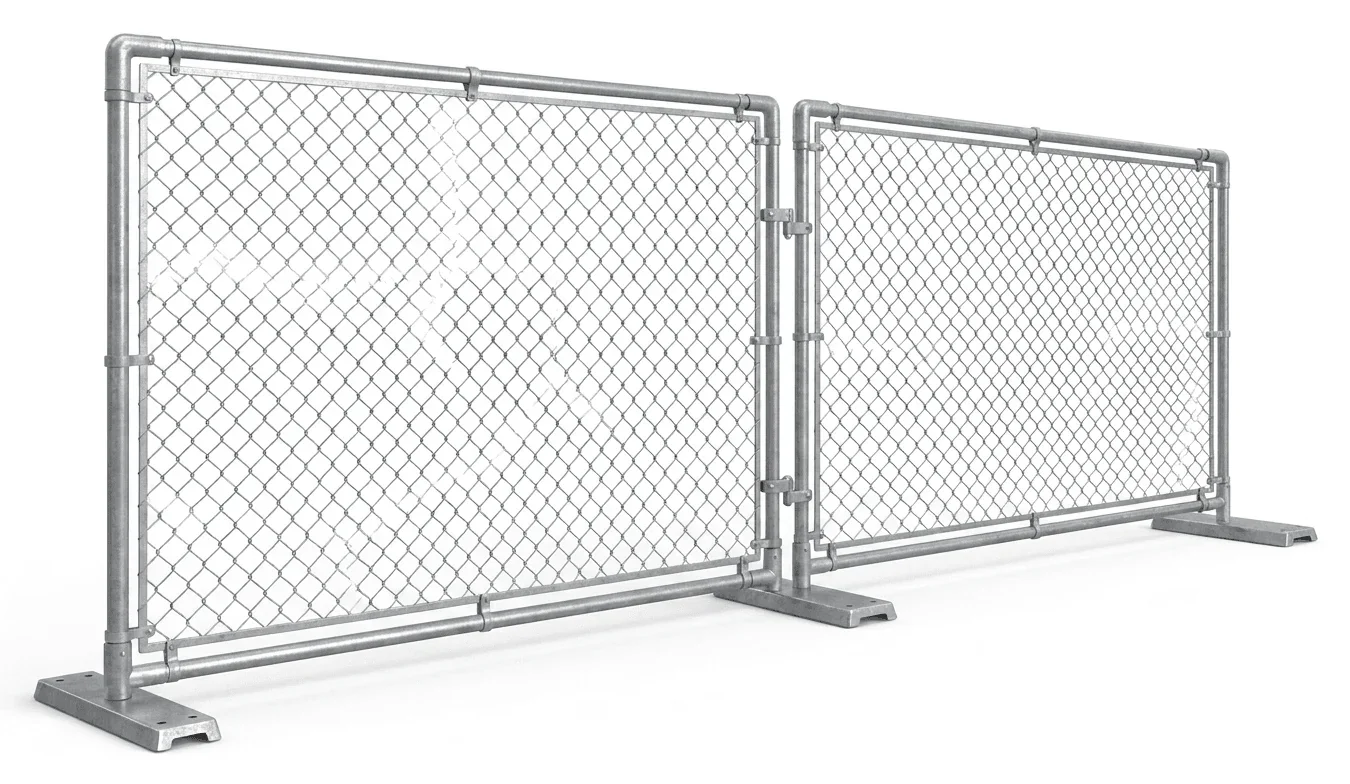
In windy, open areas, panel geometry and site-stability factors planning matter. Clay surfaces may not hold small feet well when saturated. Wider bases and continuous runs with strategic bracing reduce waviness along long perimeters. For pedestrian barricades near active loading, visibility and smooth edges reduce trip and snag points during nighttime moves.
Work near active aerial operations
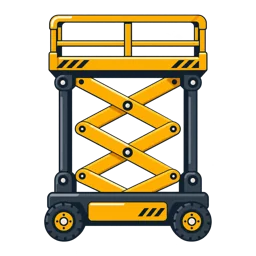
If fencing runs alongside scissor or boom lift paths, maintain clear swing and standoff distances. Aisle width should suit the largest expected machine and allow room for light towers, cords, and tool carts. Related lift categories: /boom-lift-rental/, /articulating-boom-lift-rental/, and /telescopic-boom-lift-rental/.
Access control and wayfinding
On sites with multiple trades, clear gate numbering and barricade-guided lanes reduce cross-traffic. Lighting plans should anticipate reflections off panel surfaces at night to prevent glare into operator lines of sight.
Storm season adjustments
Rapid weather changes can challenge long fence runs. Plan segments so sections can be serviced or reconfigured without blocking critical access. Keep site-stability factors and panel hardware suited to salt air to limit corrosion during extended use.
Where fencing type shifts
- High pedestrian flow favors interlocking barricades with smooth, visible edges.
- Large laydown yards need taller, continuous panels with thought-out site-stability planning on mixed surfaces.
- Short-duration interior work may only require light barricades to define lift aisles and keep material carts organized.
Know the wind exposure, the ground, and the heaviest equipment that will pass the gates. Those three details drive the boundary plan in Corpus Christi.