Start with the load and the run
- Identify continuous and peak loads and whether they start at the same time.
- Measure cord runs and note voltage drop risk across long distances or multiple daisy-chained cords.
- Check whether the unit can sit below the task or must be placed at elevation on a pad or compacted surface.
In Corpus Christi, high humidity and salt air can affect connectors and panels. Weather-protected enclosures and clean, dry cable routing matter when the unit remains on-site for more than brief use.
Ground and access conditions
Open industrial sites and yards near the water often combine hardpack with sections of soft, shifting clay. That mix affects towable access and leveling. - If the tow path crosses clay after rainfall, plan for wider tires and stable landing spots. - Confirm the pad: gravel, asphalt, or poured slab each handles weight differently over time. - For nighttime moves, ensure the route is free of standing water that can hide ruts.
Light towers: mast and pattern
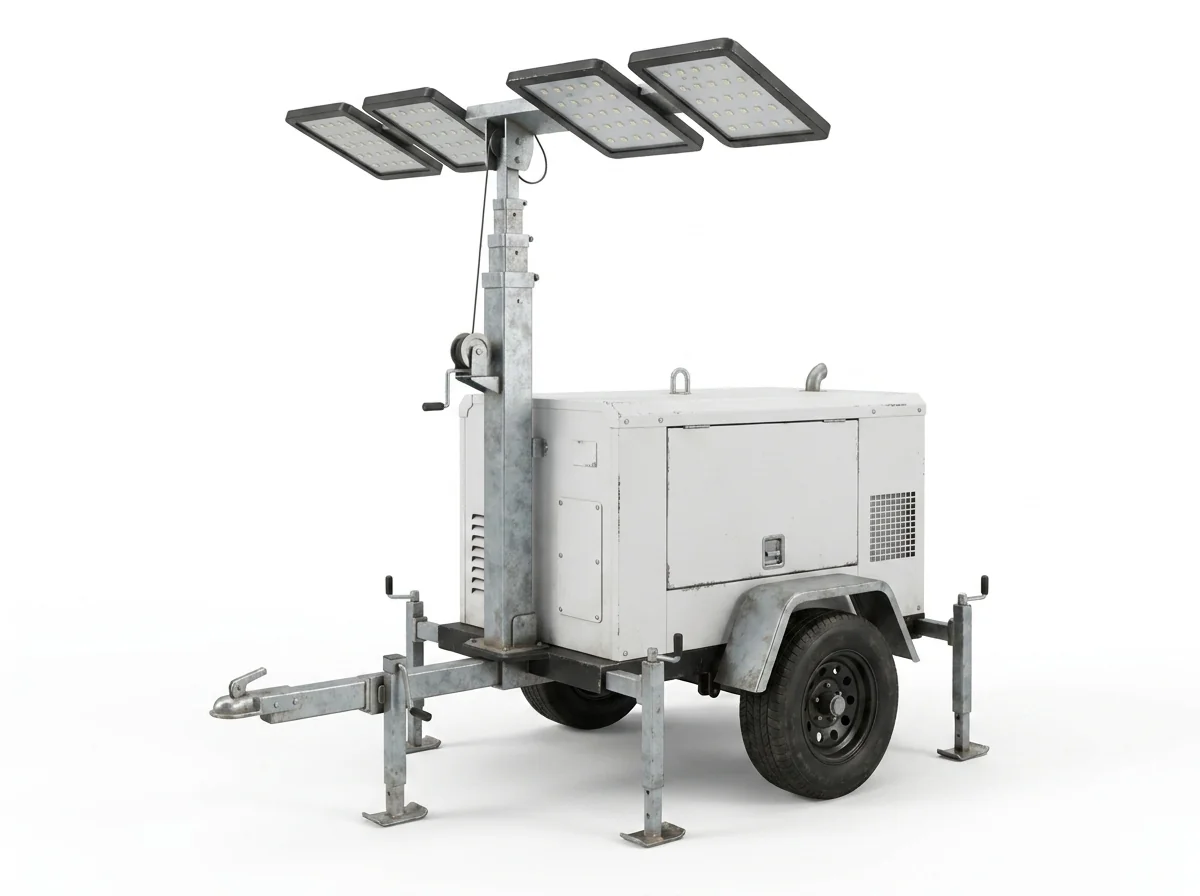
Decide whether the mast needs to clear stacked materials or temporary structures. Wind exposure on open lots can influence the suitability of taller mast units. Light distribution should match the task: - Linear work zones like fence lines and laydown rows benefit from adjustable heads aimed to reduce glare toward traffic. - Staging and loading areas need wide, even coverage that minimizes shadows at lift entry points.
Generators: enclosure and placement
Salt-laden air can accelerate corrosion on unprotected metal and terminals. Enclosed or weather-resistant packages hold up better on extended deployments. Placement tradeoffs: - Closer placement reduces voltage drop but increases the chance of heat and exhaust interacting with nearby operations. - Remote placement eases traffic flow but increases cable length and trip hazards at crossings.
Coordination with aerial work
If power or lighting supports elevated tasks, plan for boom or scissor lift swing radii, travel aisles, and headroom around masts and cabling. See related equipment comparisons at /electric-scissor-lift-rental/, /rough-terrain-scissor-lift-rental/, and /aerial-lift-rental/.
Weather and continuity
Storm systems can bring sudden wind shifts. For lighting, consider whether the area must remain lit during changing conditions and how refueling or battery swaps will occur on slick ground. For generators, ventilation and separation from fine airborne dust at industrial sites protect filters and electronics.
When to step up a category
- Long cord runs with sensitive tools may push you toward larger capacity to mitigate voltage drop.
- Large laydown yards or port-adjacent spaces may require multiple synchronized towers to avoid dark seams.
- Multi-day events or outages suggest units with extended run features and service access that suits on-site maintenance.
Plan contact details and staging on your call. Local ground, wind exposure, and salt air history at the site help match the unit to the job. For broader site needs, see /products/ or reach out via /contact/.